Fine denier polyester staple fiber is a high-performance synthetic fiber widely used in the textile industry for both apparel and industrial applications. Known for its exceptional fineness, strength, and versatility, fine denier polyester combines the advantages of traditional polyester fibers with the unique properties brought by its smaller denier.
This article provides a comprehensive overview of fine denier polyester staple fiber, including its definition, physical properties, manufacturing process, and key applications.
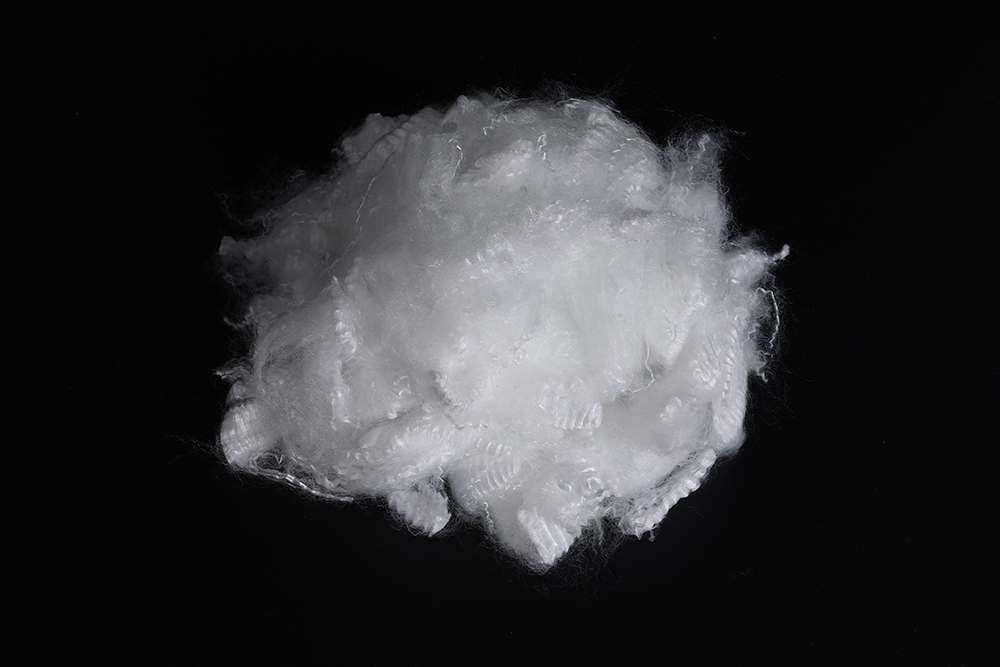
Polyester staple fiber is a form of synthetic fiber derived from polyethylene terephthalate (PET), which is polymerized, spun, and cut into short lengths known as staples. Unlike filament polyester, which is continuous, staple fibers are typically 3 to 75 mm in length and are spun into yarns suitable for weaving, knitting, or nonwoven fabrics.
Fine denier polyester staple fiber refers to fibers with a denier significantly smaller than conventional polyester, typically ranging from 1 to 3 denier per filament (dpf). This reduced diameter enhances softness, drape, and fabric uniformity, making it particularly desirable for high-end textile products and technical applications. The fineness of the fiber directly affects the tactile quality, surface smoothness, and overall performance of the finished fabric.
The term “denier” is a measure of linear mass density, defined as the weight in grams per 9,000 meters of fiber. A smaller denier indicates a finer, lighter fiber, which directly impacts the textile’s softness, breathability, and hand-feel. Fine denier fibers are often referred to as microfibers, although true microfibers are usually below 1 dpf.
Fine denier polyester staple fibers offer several advantages over standard polyester fibers:
Enhanced Softness: Reduced fiber diameter produces a smoother, silk-like feel, ideal for garments in direct contact with skin.
Better Draping: Lightweight and fine fibers contribute to improved fabric drape and flow, enhancing apparel design possibilities.
Increased Surface Area: Smaller fibers have higher surface area-to-volume ratios, improving dye absorption and finishing capabilities.
Thermal and Moisture Performance: Fine fibers can improve wicking and breathability while maintaining heat resistance and dimensional stability.
Fine denier polyester staple fiber exhibits a unique combination of physical and chemical properties that make it highly versatile:
• Tensile Strength: Despite its small diameter, fine denier polyester retains the inherent strength of PET, making it resistant to stretching, tearing, and mechanical stress.
• Elastic Recovery: The fiber maintains excellent resilience and dimensional stability, reducing wrinkling in finished fabrics.
• Moisture Wicking: Enhanced surface area enables improved capillary action, allowing textiles to absorb and transport moisture efficiently.
• Thermal Stability: Fine denier polyester withstands high temperatures during processing and end-use without significant degradation, making it suitable for heat-setting and industrial fabrics.
• Durability: Resistance to abrasion, chemicals, and UV exposure ensures longevity in both apparel and industrial products.
These properties collectively make fine denier polyester an ideal choice for high-performance textiles where comfort, aesthetics, and durability are critical.
The production of fine denier polyester staple fiber involves several precise steps to ensure uniformity, performance, and quality:
• Polymerization: PET resin is synthesized through the polymerization of purified terephthalic acid and ethylene glycol, forming high-molecular-weight polymer pellets.
• Melt Spinning: Polymer pellets are melted and extruded through spinnerets to form continuous filaments. The spinneret hole size and extrusion speed are carefully controlled to achieve the desired fine denier.
• Drawing: Filaments are stretched under controlled temperature and tension to align polymer molecules, enhancing strength, elasticity, and thermal properties.
• Cutting into Staple Fibers: Continuous filaments are cut to precise staple lengths, typically between 3 mm and 75 mm, depending on the intended application.
• Crimping and Finishing: Fibers are mechanically crimped to add bulk and elasticity, and may be treated with finishes to improve dyeability, softness, or antistatic properties.
• Quality Control: Advanced inspection techniques ensure uniform fiber diameter, strength, and consistency, maintaining high standards expected by industrial and commercial customers.
Fine denier polyester staple fiber is highly versatile and finds applications across multiple textile sectors:
• Apparel: Soft, lightweight fabrics for activewear, lingerie, shirts, and high-end fashion garments.
• Home Textiles: Bedding, upholstery, curtains, and nonwoven fabrics that require durability and comfort.
• Industrial Textiles: Filters, insulation, geotextiles, and other technical fabrics that benefit from strength and dimensional stability.
• Nonwovens: Disposable hygiene products, medical textiles, and wipes leverage the fine fiber for softness and absorption.
The ability to produce fabrics that are soft, lightweight, and durable makes fine denier polyester an indispensable material for both consumer-focused and industrial applications.