Polyester staple fiber and filament yarn are both made from the same base polymer, but their physical forms and fiber lengths differ significantly, impacting their behavior in textiles.
Staple fibers are short, cut fibers, usually ranging from a few centimeters to several inches. These fibers are crimped to improve cohesiveness and spinning performance. In contrast, filament yarns are continuous fibers, often kilometers long, that are smooth and uniform.
The length and structure of the fiber directly influence yarn hairiness, fabric drape, and appearance. Fabrics made from staple fibers tend to be softer and more breathable due to the inter-fiber air pockets created by short fibers. Filament yarns, however, produce smoother, stronger fabrics with a lustrous finish and reduced pilling.
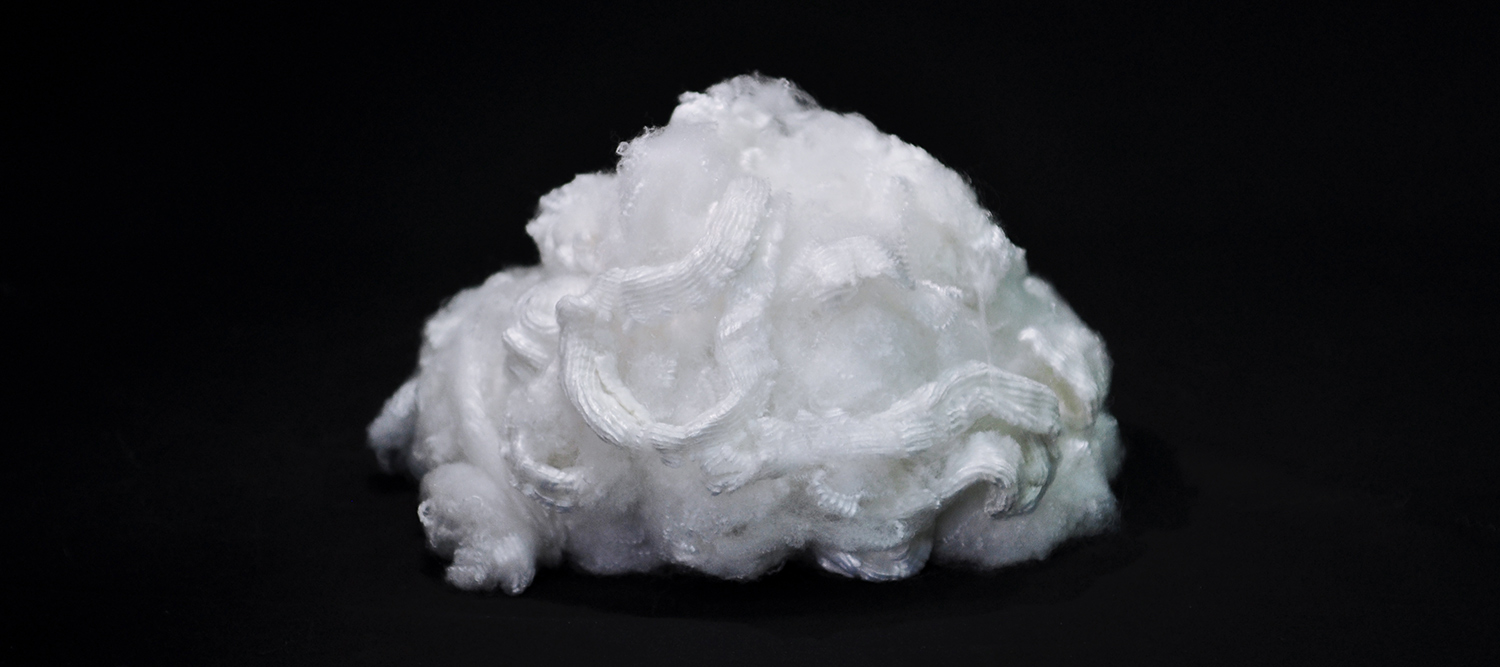
Understanding the manufacturing process is essential to grasping why these two polyester forms behave differently.
Staple fibers are typically produced via melt spinning, then drawn, crimped, and cut to specific lengths. The crimping process adds texture, allowing fibers to interlock during spinning into yarns. This process introduces slight variations in fiber diameter and length, which is why staple fiber yarn has a softer hand feel and slightly more uneven surface.
Filament yarns, on the other hand, are produced as continuous fibers through extrusion and drawing processes. They can be used as-is for weaving or twisted slightly to create filament yarns. The consistency and smoothness of filament yarns reduce the chance of pilling and enhance tensile strength.
| Performance Aspect | Polyester Staple Fiber | Polyester Filament Yarn |
| Strength & Durability | Moderate; suitable for apparel and home textiles | High; ideal for industrial and technical fabrics |
| Softness & Comfort | Excellent; crimped fibers trap air for warmth and elasticity | Smooth, less soft; focus on durability rather than coziness |
| Appearance | Matte, cozy look | Smooth, lustrous, sleek finish |
| Moisture & Breathability | High; interlocking fibers improve wicking | Moderate; continuous fibers reduce air pockets |
| Drape & Hand Feel | Soft, flexible, natural feel | Firm, sleek, uniform drape |
| Pilling Tendency | Slightly higher due to fiber ends | Low, very smooth surface |
| Best Applications | Apparel, home textiles, nonwoven fabrics | Technical textiles, upholstery, woven fabrics requiring high strength |
Cost and supply considerations are critical for manufacturers and buyers.
Staple fibers are generally less expensive per kilogram due to shorter processing steps and the ability to use recycled polyester. However, spinning into yarns may add extra cost depending on fabric quality requirements.
Filament yarns tend to cost more because continuous fiber extrusion, drawing, and winding require more precise equipment and energy. Their consistent quality, however, often justifies the higher price in technical applications.
Supply chain stability can also vary. Filament yarns often require longer lead times, especially for specialty finishes, while staple fibers have more flexible sourcing options and can be purchased in bulk from multiple suppliers.
Choosing between polyester staple fiber and filament yarn depends on end-use requirements:
1. For soft, breathable apparel or cozy home textiles, staple fiber yarn is usually preferred.
2. For high-strength fabrics, technical textiles, or lustrous finishes, filament yarn is the better choice.
3. Consider cost, supply stability, and manufacturing capabilities when making bulk purchasing decisions.
In many cases, blending staple fibers with filament yarns can combine the best of both worlds—softness, durability, and a balanced aesthetic. Evaluating your fabric’s performance goals, cost constraints, and production process ensures you select the most appropriate polyester yarn for your project.