Polyester fiber balls, also known as PSF balls or fiberfill balls, are small, soft, and fluffy synthetic materials widely used in bedding, upholstery, toys, and other home textile products. Made from polyester fibers, these balls provide excellent resilience, softness, and long-lasting support, making them a preferred alternative to natural fillers like cotton or down. Understanding their production, features, and safety aspects helps consumers and manufacturers make informed choices.
The production of polyester fiber balls begins with the preparation of polyester fibers, which are derived from polyethylene terephthalate (PET) through a melt-spinning process. These fibers are then cut to uniform lengths to ensure consistency. To enhance elasticity and volume, the fibers undergo crimping or conjugation, and hollow fibers are often used to improve softness and insulation. After cleaning and drying to remove impurities and moisture, the fibers are carded and mechanically formed into small, round balls, ensuring uniform size, lightweight properties, and excellent fluffiness. Finally, the PSF balls go through quality control checks, including assessments of density, fiber strength, and loft, to meet both industrial and consumer standards.
The production process can be adjusted to create fiber balls of varying density and size depending on the intended application, whether for soft pillows, firm cushions, or plush toys.
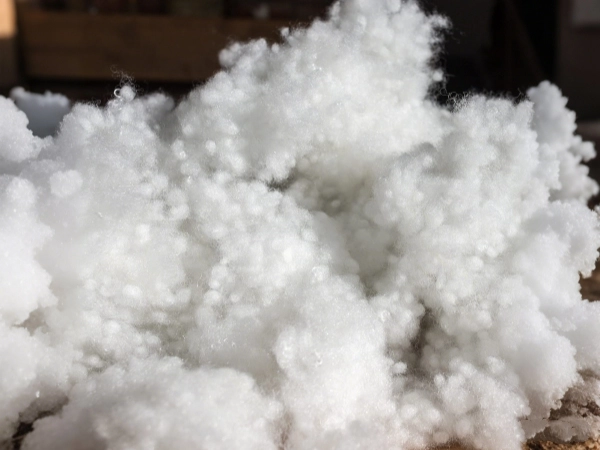
Polyester fiber balls are highly valued for their unique properties:
These features make PSF balls versatile across various industries, from bedding manufacturing to soft toy production.
When compared with traditional fillers, polyester fiber balls offer several advantages:
| Feature | Polyester Fiber Balls | Cotton Fillers | Foam Fillers |
| Softness & Loft | High, consistently fluffy | Soft initially, flattens over time | Firm but may compress quickly |
| Durability | Long-lasting, maintains shape | Shorter lifespan, prone to clumping | Medium lifespan, can break down |
| Moisture Resistance | Excellent, quick-drying | Absorbs water, may mold | Varies, some retain moisture |
| Allergen Control | Hypoallergenic, dust-resistant | May harbor dust and allergens | Generally hypoallergenic |
| Maintenance | Easy to wash, quick-dry | Requires careful washing | Limited washing options |
Polyester fiber balls often outperform natural cotton and foam in terms of resilience, hygiene, and ease of care, making them a popular choice for modern bedding and upholstery.
Polyester fiber balls are generally considered safe and hypoallergenic. Their synthetic nature makes them resistant to dust mites, mold, and bacterial growth, which is particularly important for people with allergies or respiratory sensitivities. High-quality PSF balls comply with international standards such as OEKO-TEX and REACH, ensuring they are free from harmful chemicals. Some fiber balls are also treated to meet fire safety requirements for home textiles. In addition, they emit very low levels of volatile organic compounds (VOCs), minimizing off-gassing concerns commonly associated with certain foam fillers. Choosing certified fiber balls from reputable manufacturers guarantees safety, durability, and long-term comfort.
Q1: Can polyester fiber balls be washed?
Yes, they are machine-washable and dry quickly. Gentle washing preserves their shape and fluffiness.
Q2: What sizes are available?
Fiber balls come in various diameters, typically ranging from 0.5 mm to 3 mm, depending on the desired softness and application.
Q3: Are PSF balls environmentally friendly?
Polyester is a synthetic material derived from petroleum. Some manufacturers offer recycled PSF balls made from post-consumer PET bottles, reducing environmental impact.
Q4: How long do fiber balls last in pillows or cushions?
High-quality polyester fiber balls maintain their loft for 3–5 years under normal use.
Q5: Can PSF balls replace down or foam completely?
Yes, for many applications, PSF balls provide similar softness and support while being hypoallergenic and more affordable.